
A Whole-Body Approach to Airway Health: Integrating Dental and Cranial Osteopathic Perspectives

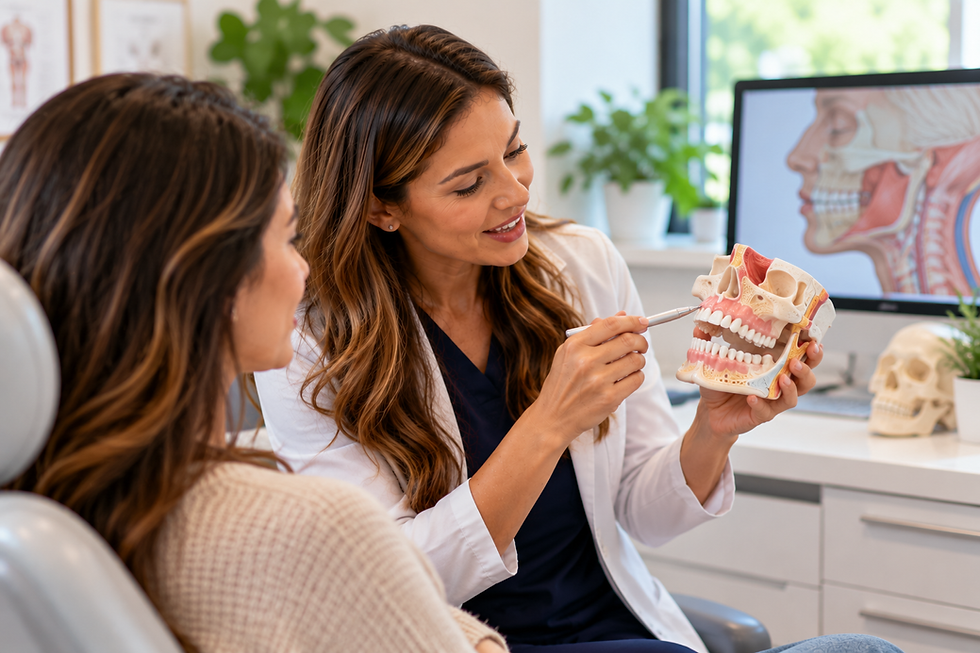
What if successful dental treatment requires looking beyond the teeth and considering how the entire body functions?
The relationship between oral health and overall wellness extends far beyond cavities, periodontal disease, and dental alignment. The jaw, temporomandibular joints, cervical spine, muscles, and surrounding craniofacial structures interact through complex anatomical and neurological relationships.
For airway-focused professionals, these connections raise important questions about how breathing, posture, chewing, swallowing, and craniofacial development influence treatment planning.
In an Airway Circle Thursday Night Live presentation, Dr. Noha Oushy, a biological dentist practicing in New Mexico, shared her approach to integrating biological dentistry, cranial osteopathy, nutrition, and interdisciplinary collaboration into comprehensive patient care.
Dr. Oushy is certified by the International Academy of Biological Dentistry and Medicine and accredited by the International Academy of Oral Medicine and Toxicology. Her clinical philosophy emphasizes the relationship between oral structures, the temporomandibular joints, cranial mechanics, and overall physiology.
With advanced training in cranial osteopathy and airway-focused dentistry, she encourages clinicians to evaluate the patient as an interconnected system rather than treating the teeth as isolated structures.
Her central message was that understanding how the body functions can help clinicians make more thoughtful decisions about when and how to intervene.
What Is Biological Dentistry?
Biological dentistry is an approach to dental care that considers how oral conditions and dental treatments may interact with the patient's broader health.
Dr. Oushy described biological dentistry as high-quality dental care that seeks to use the safest and least toxic appropriate methods while respecting the patient's individual biological circumstances.
Her clinical approach considers factors such as medical history, systemic inflammation, nutritional status, material selection, airway function, and musculoskeletal health.
Patients seeking biological dental care may have complex medical histories, chronic symptoms, or concerns about previous dental treatment. However, biological dentistry is not a separate evidence-based specialty with universally standardized diagnostic and treatment protocols.
Its individual practices should therefore be evaluated according to the evidence supporting each intervention.
For dental and airway-focused professionals, the most valuable principle is that oral care should account for the patient's medical history, individual risks, and overall health.
Why a Comprehensive Medical and Dental History Matters
Dr. Oushy emphasized that understanding the patient's history is an essential first step.
Her intake process extends beyond current dental symptoms to include medical conditions, previous dental procedures, childhood injuries, birth history, trauma, and functional concerns.
This approach reflects her interest in how craniofacial development, airway function, and musculoskeletal patterns may influence the patient's current presentation.
A comprehensive evaluation may consider:
Previous orthodontic treatment or expansion
History of dental extractions or restorative procedures
Temporomandibular joint symptoms
Headaches or facial pain
Cervical posture and mobility
Nasal obstruction and breathing patterns
Previous facial or head trauma
Sleep-related symptoms
Nutritional concerns
Relevant systemic medical conditions
The objective is to identify factors that may influence treatment safety, prognosis, and the need for interdisciplinary referral.
The Role of CBCT and Advanced Imaging
Cone-beam computed tomography (CBCT) can provide detailed three-dimensional information about craniofacial anatomy.
In dental practice, CBCT may be appropriate for selected diagnostic questions involving dental structures, impacted teeth, complex anatomy, jaw relationships, or surgical planning.
Dr. Oushy discussed the importance of carefully reviewing CBCT studies and obtaining interpretations from appropriately trained oral and maxillofacial radiologists. This is particularly relevant because dental imaging may reveal incidental findings outside the primary area of concern.
However, CBCT is not a comprehensive diagnostic test for brain disease, and it cannot replace medical imaging such as MRI when neurological or intracranial conditions are suspected. Radiation exposure should also be considered, especially in pediatric patients.
The decision to obtain CBCT should be based on a specific clinical indication and whether the imaging is likely to influence treatment.
Understanding the Relationship Between the Jaw, TMJ, and Cervical Spine

The temporomandibular joints connect the mandible to the temporal bones and function within a complex neuromuscular system. Jaw movement requires coordination between the muscles of mastication, the cervical musculature, and the nervous system.
Dr. Oushy emphasized that clinicians should consider the relationship between jaw function and head and neck posture. Patients with temporomandibular disorders may also experience neck pain, headaches, or altered cervical movement.
Research has identified associations between TMD symptoms and cervical musculoskeletal dysfunction, although the direction of causation is not always clear.
An abnormal bite does not automatically cause poor posture, and correcting dental occlusion does not reliably correct whole-body alignment.
Nevertheless, evaluating cervical symptoms alongside jaw function may help clinicians identify patients who would benefit from physical therapy or other interdisciplinary care.
Why Gait and Postural Assessment May Be Relevant
Dr. Oushy incorporates gait and postural observation into her broader clinical assessment. She discussed how changes in jaw position, cervical movement, and muscle recruitment may influence the way patients hold and move their bodies.
During the presentation, she demonstrated how changes in head position or bite support appeared to influence neck range of motion and postural performance.
These observations can be useful for generating clinical questions.
However, immediate changes following bite stabilization do not establish that dental occlusion was responsible for the original postural pattern. Posture and gait involve complex interactions between vision, vestibular function, proprioception, musculoskeletal health, and neurological control.
For airway-focused professionals, the practical lesson is to recognize associated symptoms and refer patients for appropriate evaluation when necessary.
Cranial Osteopathy: Looking at the Cranium as a Living Structure

One of the most distinctive aspects of Dr. Oushy's presentation was her discussion of cranial osteopathy. Cranial osteopathy is a manual therapy approach that evaluates and attempts to influence subtle movements and relationships involving the cranium and surrounding tissues.
Dr. Oushy challenged the idea that the cranium should be viewed as a completely rigid structure. Cranial sutures are biologically active structures involved in skull growth and development. They contain connective tissues and participate in the transmission of forces across the skull.
However, the degree of independent cranial bone mobility in adults and the reliability of detecting specific cranial motion patterns through manual palpation remain scientifically debated.
Similarly, evidence that cranial osteopathic manipulation can correct airway obstruction, change dental expansion outcomes, or treat systemic disease is limited. Dr. Oushy presented cranial osteopathy as part of her clinical framework for understanding structural relationships and functional adaptation.
For healthcare professionals, these concepts should be distinguished from established craniofacial anatomy and validated treatment methods.
Cerebrospinal Fluid and the Glymphatic System
Dr. Oushy also discussed cerebrospinal fluid (CSF) and the glymphatic system.
Cerebrospinal fluid surrounds and protects the brain and spinal cord and participates in the maintenance of the central nervous system environment.
CSF movement is influenced by several physiological processes, including cardiac pulsation, respiration, and pressure gradients. The glymphatic system is a proposed network of fluid transport pathways involved in waste clearance within the brain.
Research suggests that sleep may influence aspects of glymphatic activity, making this an important area of investigation in sleep science.
However, the claim that specific cranial manual therapies reliably improve glymphatic clearance or remove toxins from the brain has not been established through high-quality clinical studies.
For airway and sleep professionals, the more firmly supported takeaway is that adequate sleep is essential for neurological function and overall health.
Cranial Asymmetry and Orthodontic Expansion
Orthodontic expansion was another important topic in the presentation. Dr. Oushy discussed how craniofacial asymmetry may influence treatment planning and the response to orthodontic forces.
Patients may present with skeletal asymmetry, dental midline discrepancies, occlusal canting, or differences in the shape and position of the maxilla. These findings are clinically relevant because orthodontic expansion does not necessarily produce identical movement on both sides.
Asymmetrical skeletal resistance, appliance design, anchorage, and individual anatomy may affect treatment outcomes. Dr. Oushy described these relationships using a cranial osteopathic framework involving patterns of internal and external rotation.
Although those specific cranial strain classifications are not universally validated orthodontic measurements, the broader concern about identifying skeletal asymmetry before expansion is clinically reasonable.
A comprehensive orthodontic assessment should evaluate existing asymmetry and consider whether specialist collaboration is needed.
Why Stabilization May Come Before Expansion
Dr. Oushy advocates for a stabilization phase in selected patients presenting with substantial pain, musculoskeletal dysfunction, or complex craniofacial asymmetry.
In her approach, this phase may include collaboration with myofunctional therapists, physical therapists, cranial osteopathic practitioners, or other providers before beginning orthodontic expansion. The intention is to identify functional limitations and improve the patient's ability to tolerate treatment.
For patients with active TMD symptoms, cervical pain, or significant functional problems, appropriate assessment and conservative management may be useful before elective treatment proceeds.
However, cranial manual therapy has not been established as a necessary prerequisite for maxillary expansion. Treatment sequencing should be based on the patient's diagnosis, functional limitations, risks, and the evidence supporting the proposed intervention.
Wolff's Law and Bone Remodeling
Dr. Oushy emphasized Wolff's law as a foundational principle for understanding how bone adapts to mechanical loading. Wolff's law describes the relationship between bone structure and the forces placed upon it.
Bone is a living tissue that responds to its mechanical and biological environment through continuous remodeling. During orthodontic treatment, controlled forces influence the periodontal ligament, alveolar bone, and surrounding tissues. Osteoblasts participate in bone formation, while osteoclasts contribute to bone resorption. These processes are necessary for tooth movement and adaptation.
Dr. Oushy discussed the possible importance of cyclical loading and recovery periods in supporting bone remodeling. However, it would be inaccurate to say that static orthodontic forces produce only resorption or that cyclical forces have been proven superior for every expansion protocol.
Appropriate orthodontic mechanics depend on the patient's age, anatomy, bone biology, appliance type, and treatment objectives.
Nutrition and Bone Health
Nutrition was a major theme throughout Dr. Oushy's presentation. Bone remodeling depends on adequate nutritional status, metabolic regulation, and overall physiological health.
She highlighted three nutrients in particular: vitamin D, vitamin K2, and magnesium.
These nutrients participate in processes associated with skeletal health, mineral metabolism, and cellular function.
For patients undergoing orthodontic treatment, identifying clinically significant nutritional deficiencies may be relevant to general health and recovery.
However, routine high-dose supplementation has not been established as a method for improving orthodontic expansion or preventing relapse in patients without documented deficiencies.
Supplementation should be individualized according to medical history, dietary intake, laboratory findings when appropriate, and professional guidance.
Vitamin D and Craniofacial Health
Vitamin D plays an important role in calcium and phosphate metabolism. Adequate vitamin D status is necessary for normal bone mineralization and skeletal health. Deficiency may contribute to impaired mineralization and other skeletal problems.
Dr. Oushy discussed the relevance of vitamin D to bone remodeling during orthodontic treatment. This relationship is biologically plausible because orthodontic movement depends on coordinated activity within bone and periodontal tissues.
However, evidence is insufficient to conclude that routine vitamin D supplementation accelerates orthodontic treatment or improves airway outcomes in otherwise healthy patients. The clinical priority is identifying and correcting deficiency when indicated.
Vitamin K2 and Calcium Regulation
Vitamin K participates in the activation of several proteins involved in blood coagulation and bone metabolism. Vitamin K2 is a group of compounds that has attracted attention for its potential relationship to skeletal and cardiovascular health.
Dr. Oushy described vitamin K2 as a nutrient that helps regulate how calcium is used within the body. Although vitamin K-dependent proteins play roles in bone and vascular biology, it is an oversimplification to suggest that vitamin K2 directs calcium exclusively into teeth and bones while preventing its deposition in arteries.
Clinical research has not established that routine K2 supplementation prevents cardiovascular calcification or improves orthodontic treatment outcomes. Patients taking anticoagulant medications, particularly warfarin, should also avoid making changes to vitamin K intake or supplements without medical guidance.
Magnesium and Vitamin D Metabolism
Magnesium is essential for numerous enzymatic reactions throughout the body.
It contributes to neuromuscular function, energy metabolism, bone health, and processes involved in vitamin D metabolism.
Dr. Oushy emphasized that magnesium status should be considered when evaluating nutritional health. Because much of the body's magnesium is stored in bone and intracellular compartments, serum magnesium does not perfectly represent total-body stores.
Nevertheless, serum magnesium remains a useful clinical measurement in appropriate circumstances. Magnesium deficiency can have important physiological consequences, but symptoms such as muscle cramps or fatigue are nonspecific and require proper evaluation.
Supplementation should be based on individual needs rather than assuming that every patient requires additional magnesium.
Dental Materials and Biocompatibility
Dr. Oushy also discussed the importance of selecting dental materials according to patient needs and medical history. Dental materials may contain metals, resins, ceramics, and other substances with different physical and biological properties.
Some patients develop confirmed hypersensitivity reactions to specific components. When a material allergy is suspected, appropriate medical or dental assessment may be useful.
However, commercially marketed material compatibility tests vary substantially in scientific validity. Routine testing without a clear clinical indication may produce misleading results.
Similarly, existing dental restorations should not be removed solely because of unvalidated compatibility findings. Material selection should consider durability, safety, allergy history, functional requirements, and established evidence.
Environmental Factors, Inflammation, and Airway Symptoms
Dr. Oushy encouraged clinicians to consider environmental exposures when patients present with persistent upper respiratory or inflammatory symptoms. She discussed mold exposure as one possible factor contributing to respiratory complaints.
Damp indoor environments and mold exposure can be associated with respiratory symptoms, particularly in individuals with asthma or allergic conditions. However, symptoms such as chronic sinus congestion, fatigue, and inflammation can have many causes.
Patients should receive appropriate medical evaluation rather than assuming that environmental toxins explain all persistent symptoms. The clinical takeaway is to consider environmental and occupational history when relevant while avoiding unsupported diagnostic conclusions.
The Importance of Chewing and Swallowing Function
Chewing and swallowing require coordination between the tongue, jaw, facial muscles, and pharyngeal structures. Dr. Oushy emphasized that oral function interacts with musculoskeletal activity and craniofacial development.
Efficient mastication depends on adequate dental contact, jaw mobility, tongue movement, and neuromuscular control. Similarly, swallowing requires coordinated oral preparation and transport, followed by appropriate pharyngeal and esophageal activity.
These functions are important to evaluate in patients with oral motor difficulties, TMD symptoms, or airway-related concerns. Dr. Oushy also proposed that chewing and swallowing influence cranial fluid dynamics.
While the relationship between muscle activity and regional blood flow is physiologically relevant, claims that specific chewing or swallowing exercises detoxify the pituitary gland or directly improve glymphatic clearance remain unproven.
For myofunctional therapists, the established clinical focus should remain on improving measurable oral function.
Connecting Myofunctional Therapy With Whole-Body Assessment
Myofunctional therapy can contribute valuable information to a multidisciplinary patient evaluation.
A therapist may identify difficulties involving tongue mobility, oral rest posture, swallowing, chewing, lip competence, or nasal breathing. These functional observations may help other providers understand the patient's symptoms and treatment needs.
For example, a patient with persistent mouth breathing may require ENT evaluation before nasal breathing exercises can be successful. A patient with jaw pain may benefit from assessment by an orofacial pain specialist. A patient with significant cervical symptoms may need physical therapy. A patient with skeletal constriction may require orthodontic evaluation.
Dr. Oushy's presentation reinforced the importance of recognizing that one specialty cannot address every aspect of a complex case.
Cranial Osteopathy and Craniosacral Therapy
During the presentation, Dr. Oushy discussed the distinction between cranial osteopathy and craniosacral therapy. Both involve manual approaches directed toward the cranial region and associated tissues, but they differ in training pathways, clinical philosophy, and techniques.
Cranial osteopathy is generally associated with osteopathic manual medicine, while craniosacral therapy is practiced by professionals from a variety of backgrounds.
Dr. Oushy emphasized the importance of evaluating the training and experience of practitioners before referring patients.
However, there is no established evidence demonstrating that one approach consistently corrects cranial dysfunction more effectively than the other.
For patients considering either intervention, practitioners should clearly explain the proposed treatment, potential benefits, limitations, and evidence.
Such therapies should not delay necessary dental, medical, orthodontic, or neurological care.
The Value of Multidisciplinary Collaboration

A recurring theme throughout Dr. Oushy's presentation was the importance of collaboration.
Complex patients may require different professionals to evaluate different aspects of their health.
Depending on the clinical presentation, the team may include:
General and biological dentists
Orthodontists
Myofunctional therapists
ENTs
Orofacial pain specialists
Physical therapists
Osteopathic physicians
Sleep physicians
Nutrition professionals
Other appropriately trained healthcare providers
Each discipline can contribute information that helps clarify the patient's needs.
However, collaboration is most effective when it is based on clearly defined treatment goals, appropriate scope of practice, and evidence-informed decision-making.
The objective should be coordinated care rather than unnecessary referrals or interventions.
Clinical Questions for Healthcare Professionals
When evaluating patients with complex dental, airway, or musculoskeletal concerns, clinicians may consider asking:
Does the patient have a history of facial trauma or orthodontic treatment?
Are there significant craniofacial or dental asymmetries?
Does the patient experience jaw pain, headaches, or cervical discomfort?
Is nasal breathing comfortable and unobstructed?
Are there signs of sleep-disordered breathing?
Does the patient demonstrate functional limitations in chewing or swallowing?
Is the patient receiving appropriate treatment for underlying medical conditions?
Are nutritional deficiencies suspected or documented?
Are dental material concerns supported by a clinically relevant history?
Would CBCT or another imaging study change the treatment plan?
Is physical therapy or an orofacial pain evaluation indicated?
Are proposed interventions supported by reliable evidence?
Would communication between existing providers improve treatment planning?
These questions can help clinicians recognize when a broader assessment is appropriate while keeping treatment focused on meaningful clinical findings.
Key Takeaways for Healthcare Professionals
Oral health is connected to systemic health through multiple biological and functional pathways.
A comprehensive medical and dental history can improve treatment planning, particularly in patients with complex symptoms.
Jaw function, temporomandibular disorders, and cervical musculoskeletal symptoms may coexist and warrant interdisciplinary assessment.
Craniofacial asymmetry should be considered before orthodontic expansion or other structural interventions.
CBCT can provide valuable anatomical information when clinically indicated, but it should not be used indiscriminately.
Cranial osteopathy offers a particular manual therapy framework, although many claims concerning cranial motion and systemic effects lack strong clinical validation.
Bone remodeling is influenced by mechanical loading and biological factors, consistent with principles of skeletal adaptation.
Vitamin D, vitamin K, and magnesium contribute to normal physiological processes, but routine supplementation does not replace individualized nutritional assessment.
Dental material selection should be based on validated safety considerations and the patient's clinical needs.
Myofunctional therapy may contribute to coordinated care by addressing identified functional concerns involving breathing, chewing, swallowing, and oral posture.
Interdisciplinary collaboration is most effective when treatments are selected according to clear indications and measurable outcomes.
The Airway Circle Perspective
At Airway Circle, we believe airway care benefits from understanding the relationship between anatomy, function, and the broader health of the patient.
Dr. Noha Oushy's presentation encourages clinicians to think beyond isolated dental structures and consider how symptoms involving the jaw, neck, breathing, and oral function may overlap.
A patient with persistent TMD symptoms may benefit from a broader musculoskeletal assessment. A patient undergoing expansion may require careful evaluation of skeletal asymmetry and existing functional limitations. A patient with chronic mouth breathing may need ENT assessment before myofunctional therapy can effectively support nasal breathing.
The most valuable lesson is not that every patient needs cranial therapy, nutritional supplementation, or extensive testing. It is that clinicians should remain curious about the patient's complete presentation while applying treatments that are appropriate, safe, and supported by evidence.
The airway-centered team works best when each provider contributes their expertise and recognizes the limitations of their own specialty.
Final Thoughts
The relationship between dentistry and whole-body function continues to evolve as researchers explore connections between oral health, craniofacial anatomy, neuromuscular activity, sleep, and systemic physiology.
Dr. Oushy's presentation highlights the importance of looking beyond individual teeth and considering the patient as a whole.
At the same time, comprehensive care requires distinguishing established anatomical and physiological relationships from emerging hypotheses and unvalidated treatment methods.
For airway-focused professionals, the goal should be to understand how anatomy and function interact, identify meaningful clinical limitations, and coordinate care when the patient's needs extend beyond one specialty.
Treating the whole patient does not mean treating everything. It means understanding which factors matter and choosing interventions that genuinely improve function and health.
Need Guidance With Airway, Jaw Function, or Myofunctional Therapy?
If you or your child experiences mouth breathing, tongue posture concerns, swallowing difficulties, oral restrictions, or other orofacial myofunctional challenges, a comprehensive evaluation can help determine which factors may be contributing.
Depending on the clinical findings, appropriate care may involve myofunctional therapy, airway-focused dentistry, orthodontics, ENT evaluation, sleep medicine, or collaboration with other healthcare professionals.
The goal is to understand the underlying concern and identify the most appropriate next step.


Comments